Showing posts with label History. Show all posts

Thursday, May 14, 2015

Movie Review: The Lost Bladesman (2011)

Although the Three Kingdoms period of Chinese history is a popular subject in East Asian media,  most epic dramas suffer from being overly melodramatic or underwhelming as actioners.  Starring Donnie Yen, arguably the finest martial artist in films today, I wanted to give a shout out to an under appreciated historical action flick that deftly avoids both problems, The Lost Bladesman:


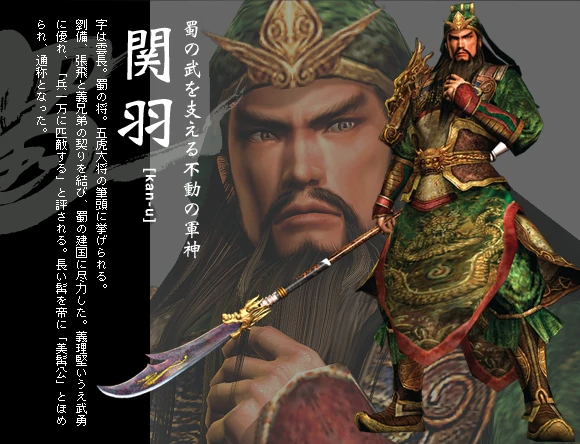
In the Romance of the Three Kingdoms, few heroes loom as large as the legendary warrior Guan Yu.  Not only is he a peerless fighter, armed with an imposing signature weapon (The Green Dragon Crescent Blade (青龍偃月刀), though this may be anachronistic since there's no proof of that the guandao was invented prior to the 11th century), he's also seen as a paragon of loyalty and righteousness.  In fact, the dude is actually worshipped in many parts of East Asia (e.g., there's a shrine to him in every police station in Hong Kong)!

Thus, it it unsurprising that he has been celebrated in numerous books, films, video games and other media for two millennia.


Although Guan Yu is a historical figure, since he was popularized in the Romance of the Three Kingdoms, which is a mix of fact and fiction, many of his most famous tales of derring-do are myths.  Such is the case with The Lost Bladesman: Based on the fictional story of Guan Yu crossing five passes and slaying six generals, the film actually begins with the great warrior's funeral in 220 and is told by his frenemy Cao Cao, the prime minister of the Han Dynasty.

Quickly, the action reverts back 20 years to the Battle of Baima (白馬之戰), where Guan Yu temporarily allies with Cao Cao and defeats a common enemy.  The prime minister showers the warrior with title and treasure to try to win the latter's loyalty.  However Guan Yu stays true to his sworn brother, the rebel warlord Liu Bei.


Thereafter, Guan Yu battles his way back to rejoin Liu Bei's army, facing both deadly foes and cunning treachery.  However, it is treachery that ultimately defeats the undefeatable warrior, as Cao Cao muses at the end of the film that such a hero is ultimately a tool to be sacrificed by his sworn brother in such chaotic times.

As a period piece, The Lost Bladesman is a finely crafted reimaging of the source material, with lush cinematography, and avoids being ponderous or overly serious.  Donnie Yen proves his dramatic chops and carries the show admirably.  The feel of the movie is realistic and lived in.  Also, like a good Greek tragedy, the characters are driven by their strengths (duty and honor) into conflict, and Guan Yu's opponents are more than just 2D cutouts.

As an action film, this movie kicks ass, a lot of it:


As action director, Messr Yen is equally strong.  Each combat features different fighting styles and signature weapons.   Guan Yu is clearly a badass, but his feats never break the viewer's verisimilitude or cross the line into cartoonishness.

If you like Iron Age action films, The Lost Bladesman is at the top of the heap.  Plus, it's worth it just to see someone able to wield a guandao with such aplomb!


SC's Parting Shot: 9 of 10

Saturday, May 2, 2015

Culture: Onigiri (~700)

For over a millennia, the Japanese have enjoyed arguably the greatest "on the go" food in the world,  Onigiri (お握り).   A simple combination of rice, a filling and a bit of salt (often wrapped in seaweed and sometimes accompanied with a topping) produces a taste sensation that serves as everything from a yummy snack to a healthy and filling meal.  In the words of the immortal Strong Bad, on a scale from one to awesome, Onigiri is super great!


Since at least the Nara period (奈良時代), people in Japan have rolled rice into balls for ease of consumption.  Nowadays, onigiri is also often shaped as a triangle, especially when sold in convenience stores, although balls are common for bento boxes:


As you might expect, people have been doing creative things with the presentation of onigiri for a long time:


Among the most awesome inventions from the Land of the Rising Sun, the popularity of onigiri has  understandably spread through out East Asia and even reached California, which is unsurprising as the aptly named Golden State often serves to introduce great ideas to the rest of America.

Here, we see no less a personage than the ridiculously badass Kibagami Jubei enjoying one of these suckers!


If you're in the mood for some onigiri yourself but don't know where to start, check out this video from the hi*LAR*ious series Cooking with Dog:


やった !

Friday, April 24, 2015

Warfare: The Chariot (~2000BC)

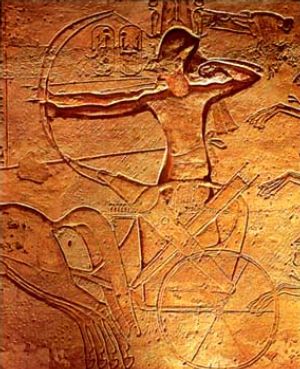
Somewhat forgotten nowadays, the chariot was the first great weapons platform, remaining king of the battlefield for over a millenia:

Pharaoh Ramses II at the Battle of Kadesh


The chariot was an evolutionary development from earlier animal drawn vehicles such as wagons and carts.  They served first as mobile archery platforms and later, with the development of scythed chariots, on the charge they were able to deliver devastating shock attacks.  The chariot's speed and mobility were game changing and Maneuver Warfare became possible for the first time.

As you might expect, the history of the chariot is intimately tied to that of the horse.  Since an increasing amount of evidence supports the hypothesis that horses were domesticated in the Eurasian Steppes during approximately 4000–3500 BC, it is unsurprising that the first true chariots were probably invented near the Ural Mountains around 2000 BC:


The steppe nomads likely used their new war machines for raids against other peoples, leading to the widespread dissemination and adoption of this new technology from China to Britain.

Coming at a time in the horse's domestication prior to the possibility of cavalry, these war machines were nevertheless able to harness equine speed and agility with the help of several Bronze Age inventions, including the invention of lighter spoked wheels.  The chariot was a single axle carriage drawn by a team of one or more horses.  The crew consisted of  two or three people: a driver, an archer/commander and sometimes a spearman/shieldman.


Another Bronze Age invention, the compound bow, helped the chariot to dominate battlefields by being able to deliver armor-piercing strikes up to 100 meters away and killing shots against unarmored foes up to 300 meters away.  Since the chariot provided the compound bow with a swift, agile, stable and raised firing platform, it was a marriage made in Hades.

The cost of the horses and the chariot were prohibitive to all but nobility and royalty, and unsurprisingly the chariot became a symbol of power and status.


With the further domestication of the horse, the chariot was eventually superseded by cavalry around the 5th century BC, although the Celts continued to use them into the 1st century AD.  Nevertheless, the first great weapons platform's influence was profound and can be felt to the present day from the latest combination of mobility and firepower dominating warfare, the Main Battle Tank.


Thursday, April 16, 2015

RPGs: The Princess of Greyhawk

Whilst exploring teh interwebs for early advertisements for Dungeons & Dragons, I came across this one from 1977 that I'd never seen before:


What?  TSR (short for Tactical Studies Rules, the publisher) used to use sex appeal to sell D&D?  I was taken aback, especially considering the stereotypical image of gamers.  However, upon further reflection, the above advertisement fits the contemporary zeitgeist: for example, here is the cover for the comedy text adventure game Softporn Adventure (1981), released by On-Line Systems (which was later renamed Sierra On-Line):


The lovely woman on the right is the legendary Roberta Williams, co-founder of Sierra On-Line and designer of the all-time great King's Quest series of graphical adventure games.

Now, if you say that there's no way that the woman in the D&D ad would play RPGs, it turns out that the model was none other than Elise Gygax, eldest daughter of Gary Gygax, co-creator of D&D!  Unsurprisingly, Elise was one of the first PCs in the Greyhawk campaign, the second setting developed for Dungeons & Dragons, after co-creator Dave Arneson's Blackmoor campaign.

Yes, folks, this foxy lady:


is the daughter of this guy:


Groovy!

Thursday, April 2, 2015

Engineering: The Grand Canal of China (Completed in 609 and later extended)

Although China's best known engineering marvel is the Great Wall (萬里長城), equally impressive and perhaps even more important is the Grand Canal (大運河):


Stretching some 1,776 km (1,104 mi), the Grand Canal is the longest manmade waterway in the world.  The impetus for construction was that since China’s main rivers (the Yellow and the Yangtze) run west to east, the Sui Dynasty wanted a quicker and easier way to move foodstuffs from the fertile region around the Yangtze to troops on the northern border defending against nomadic tribes.

Their audacious answer was to combine and extend existing canals to create a new canal running from Hangzhou in the south to Beijing in the north.  In the process, the Grand Canal interconnected the Yangtze, Yellow, Huaihe, Haihe, and Qiantang Rivers, vastly improving China's transportation network.


As you might expect, the manpower required to build the Grand Canal was enormous: over six years, the government press-ganged five million people, mainly farmers, into service.  In addition, the human cost was equally massive: hundreds of thousands, if not millions, of people died during that period, not only from the actual labor but also from famine when there weren’t enough people left to harvest the crops.

This forced labor to build the Grand Canal, renovate the Great Wall, and for other public works projects, as well as costly and disastrous military campaigns against the Korean kingdom of Goguryeo, led to the overthrow of the Sui Dynasty.


Nevertheless, the Grand Canal was a stunning engineering achievement that has had an important impact and that has helped to bring vastly distant parts of China together for more than a millennia.

Later dynasties would improve the Grand Canal, such as adding water-level-adjusting pound locks after they were invented in the 10th century AD:


Even until the present, parts of the Grand Canal are still in use, mainly as a water-diversion conduit, and the main commercial artery now spans the 325 miles from Jining to the Yangtze.

Still, if you had to pick the one engineering project that has affected the most people for the longest period of time, the Grand Canal has no rival, touching the lives of billions of people for more than 1400 years.

加油!

Thursday, March 12, 2015

Culture: The Hurrian Songs (~1400 BC)

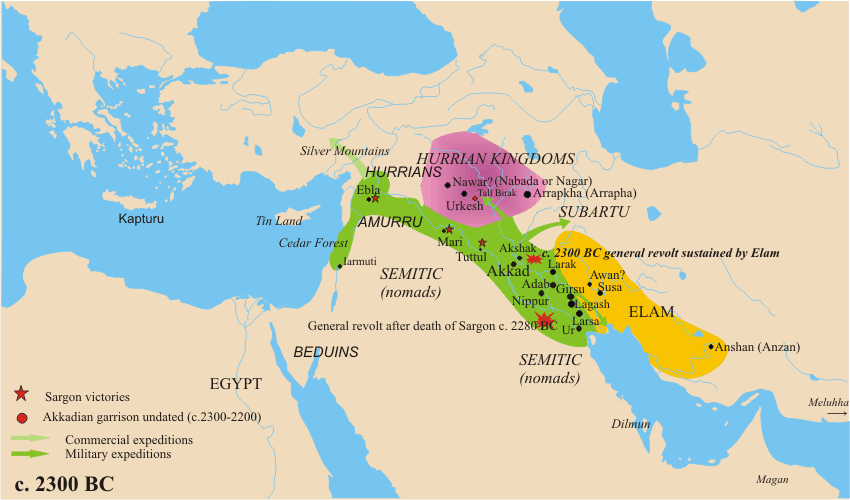
Arguably, the oldest and most universal of all languages is Music.  Even without words, a melody can tell a story and express one's mood and feelings and, since at least 55,000 BC, humans have used Music to signify important moments in life, as well as just help us through the workday grind.  The oldest known musical notation is the Hurrian Songs, a collection of 29 songs inscribed in cuneiform on clay tablets excavated from the ancient city of Ugarit.  Here is a sample of an interpretation of "Hurrian Hymn no.6", aka "h.6":


Amazing!

While we don't know the identity of h.6's composer, by listening to the composition you can still feel what he or she must have been feeling and trying to express all those millennia ago.  That is a pretty impressive achievement in communication.


Try competing with that Social Media!


Although the Hurrian Songs were unearthed in modern Syria, the Hurrians were a Bronze Age people who were originally nomadic wanderers from modern day Anatolia.  At its height, the Hurrian civilization had significant influence throughout large parts of the Fertile Crescent.  However, by the Early Iron Age, other rising powers had mostly assimilated the Hurrians, except for the Kingdom of Urartu in modern day Armenia.


The exact meaning of h.6 is not known, but it is clearly a religious hymn concerning offerings to the goddess Nikkal, wife of the moon god, and meant to be played on a harp or lyre.


So, if you're in the mood for some sweet Bronze Age music, grab your headdress and take a gander at the above video.


You stay classy, Nikkal!

Thursday, February 5, 2015

History: Battle of the Allia (390 BC (traditional), 387 BC (probable))


"Vae victis"


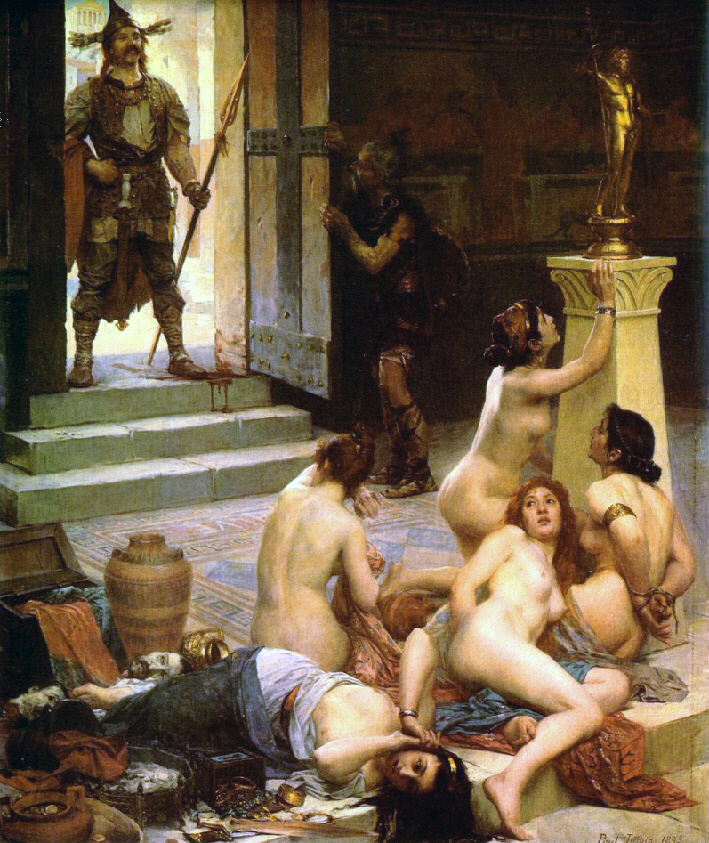
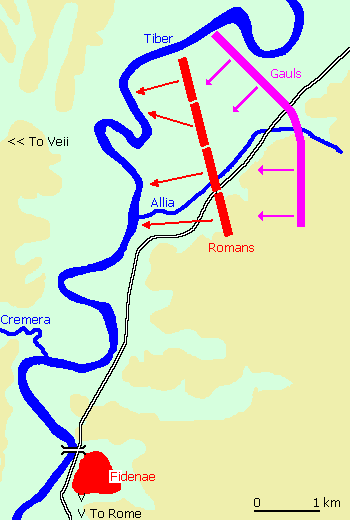
Rome's rise to power and greatness had more than a few missteps.  Nearly two centuries before Hannibal Barca's epic victory at Cannae, the Roman Army suffered a shocking defeat at the Allia that had monumental consequences.  And, like the Seattle Seahawks' horrific decision to throw a quick slant from the 1 yard line on 2nd and Goal with 0:28 left in Super Bowl XLIX, it was entirely the Romans' own fault:


Leading up to the conflict, a wandering Gallic tribe, the Senones, who may have been mercenaries, sought to settle near the Etruscan city of Clusium, understandably alarming the locals.  Lacking any major allies, the Clusians turned to Rome for help and the Romans, eager to expand their sphere of influence, sent a delegation of three ambassadors, the Fabii brothers, to negotiate a peaceful solution.

However, the brothers ended up instead enflaming the situation when, after negotiations broke down, they took up arms and killed one of the Gaulish leaders!

Then, after the Senones sent ambassadors to express their outrage, the Romans went all in and, in the words of Livy, "those who ought to have been punished were instead appointed for the coming year military tribunes with consular powers (the highest that could be granted).... The Celtic (Gallic) envoys were naturally - and rightly - indignant!"


Consequently, the Senones decided to march on Rome to express their frustration in a more direct (and pointy) way.  To try to prevent this, the Roman Army intercepted them at the Allia, a brook about 18 kilometers north of the city that feeds into the Tiber river.  The Romans' plan to avoid being outflanked, by committing their reserves to extend their line from the Tiber to a hill, spectacularly backfired when Brennus, commander of  the Senones, assaulted and seized the hill.

Next, the Gauls successfully double enveloped the Roman Army, shattering the latter's flanks, consisting of the lower-class citizens armed as skirmishers and light infantry.  Then the richer Roman citizens in the center, arrayed as Greek-style hoplites in phalanx, were encircled and slaughtered.


Thereafter, the Senones captured and sacked Rome, holding the city for months and extorting an indemnity of 1000 pounds of gold.  In the meantime, Marcus Furius Camillus, recalled from exile and appointed dictator, managed to reconstitute the Roman Army and drive off the Gauls.

Of course, that was cold comfort for the devastation and humiliation wreaked by a single Gallic tribe on (supposedly) mighty Rome.  The Romans spent the next century rebuilding their city and power in central Italy and the Day of the Allia (July 18) was considered unlucky for hundreds of years.

Like the old proverb says, "As you sow, so shall you reap."


Thursday, January 22, 2015

History: Battle of Red Cliffs (208)


The above words by Sun Tzu, author of The Art of War (孫子兵法), arguably the greatest book of military strategy of all time, stress the importance of proper preparation before facing a challenge.  So, it's interesting that Cao Cao, who wrote the first and one of the most influential commentaries on The Art of War, would fail to heed Master Sun's teachings at the Battle of Red Cliffs (赤壁之戰).  Red Cliffs is one of the best known battles in Chinese history, due in large part to a somewhat fictionalized account in Romance of the Three Kingdoms, one of the Four Great Classical Novels.  In the centuries since then, Red Cliffs has been further popularized by numerous films, television series and computer games.

In terms of the overall geopolitical situation, by 208, after decades of turmoil and civil war, Cao Cao, prime minister and commanding general of the Han Dynasty, had reunified much of northern China.  However, to win in the South, he would first need to secure the strategically vital Yangtze river.  Two powerful warlords, Liu Bei and Sun Quan, stood in the way:


An interesting fact about Red Cliffs is that we do not definitively know where the battle was fought, with several places nowadays competing for tourism revenue.


What we do know is that, after an initially successful advance south to the Yangtze, Cao Cao put his vastly numerically superior army onto boats and sailed east on the river to meet the combined Sun-Liu forces.  Although a skilled and seasoned commander, Cao Cao displayed little of this at Red Cliffs, relying instead on sheer weight of numbers and brute force.  After an indecisive initial skirmish, the allies tricked Cao Cao with a group of fake defectors who used fire ships to burn up a large number of the Han troop transports.


Cao Cao abandoned his ships and fled northwest through swampland, harassed by the rebels and taking huge losses.  Disease and shattered morale added to his woes.  Eventually, remnants of the imperial army were forced to leave the Yangtze river basin and retreat all the way back to their home base.


As noted above, it is interesting that a talented and successful general such as Cao Cao would make these kinds of mistakes.  My own supposition is that Cao's grip on the territories that he'd recently reconquered was tenuous and that much, perhaps the majority, of his army consisted of forces from these recently reconquered areas and whose loyalty was uncertain.  Thus, he wanted to push forward with the reunification of China while he still had the momentum and strategic initiative, using a rollup strategy.  However, Cao Cao's army also faced numerous challenges, including the great skill of the opposing generals, lack of naval experience, lack of familiarity with the area, etc.

Ultimately, it was a risky move that blew up in his face.


The more prudent approach would have been to wait for a better opportunity.  In the words of Master Sun:

"He who knows when he can fight and when he cannot will be victorious."

Thursday, November 27, 2014

History: Battle of Cannae (216 BC)


"Nos morituri te salutamus"


A Happy Thanksgiving to all, and I think we should all be giving thanks that we weren't the Roman Army outside of the village of Cannae two millennium ago, when they suffered arguably the most epic defeat of all time.  Though, in terms of humiliation, the Seahawks' beatdown of the Broncos in Super Bowl XLVIII might come close:


A major battle in the Second Punic War (218–201 BC), the Battle of Cannae came on the heels of Hannibal Barca's amazing crossing of the Alps with his army (which no one thought possible) and Hannibal inflicting punishing defeats on the Romans at Trebia and Lake Trasimene.

Consequently, after Dictator Fabius Maximus' strategy of attrition and avoiding pitched battles (which has been named after him) proved unpopular, the Senate raised the largest Roman army up to that time, eight legions plus auxilia, led by Consuls Gaius Terentius Varro and Lucius Aemilius Paullus to stop the Carthaginian once and for all.

What followed was a victory for Hannibal so stunning and audacious that it has been studied ever since.  As you might expect, there's been plenty of ink spilled (most notably about how he pulled off what's become the text book example of a Double Envelopment), so I'd like to focus on a couple points: First, Hannibal's analysis of the enemy commanders, and second, his ability to turn the Roman army's strengths into weaknesses.

Although the Roman army may have been of unprecedented size (greatly outnumbering the Carthaginian force), Varro and Paullus disagreed on battle strategy.  As a consequence, the Romans had a strange joint command arrangement, where leadership shifted between the two Consuls on a daily basis!


Thanks to the superb Carthaginian spy network, Hannibal had detailed information on both men, and he was able to use Varro's hotheadedness to trick the Romans into fighting the battle at a time and place of the Carthaginians' choice.  Genius!


Next, Hannibal did an amazing job of turning the Roman army's strengths against them.  Tough, disciplined, well-equipped and built around heavy infantry, the Roman army was designed to go right at their opponents like a giant armored fist.


Knowing this, Hannibal came up with an ingenious battle plan.  Putting his most experienced and reliable troops, the Africans, on his flanks, the general placed himself in the middle of his front line with his Iberians and Gauls, and personally led his center into a controlled retreat.


The Romans bit on the trap, pushing forward, and Hannibal's multiethnic force gave ground, luring in their enemies.  Meanwhile, the superior Carthaginian cavalry routed their opposite Latin counterparts, leaving both Roman flanks dangerously exposed.


The heavily massed Roman formation became increasingly crowded and the legionnaires lost cohesion.  Hannibal's African infantry turned inward, shattering both Roman flanks as the Carthaginian cavalry returned and struck the Roman center from behind.  The Roman historian Polybius wrote, "as their outer ranks were continually cut down, and the survivors forced to pull back and huddle together, they were finally all killed where they stood."


Of course, Carthage did end up losing the Second Punic War, but I think that had to do with political bickering and infighting and the Carthaginian leadership failed to give Hannibal the support needed to close out the conflict.

The Carthaginians should have kept in mind the words of Abraham Lincoln:

"A house divided against itself cannot stand."

Food for thought, whereas turkey is food for the day.

Wednesday, November 19, 2014

TV Review: Ancients Behaving Badly (2009)

Ancients Behaving Badly is a fun but flawed look at some of the greatest and/or most notorious figures of antiquity:


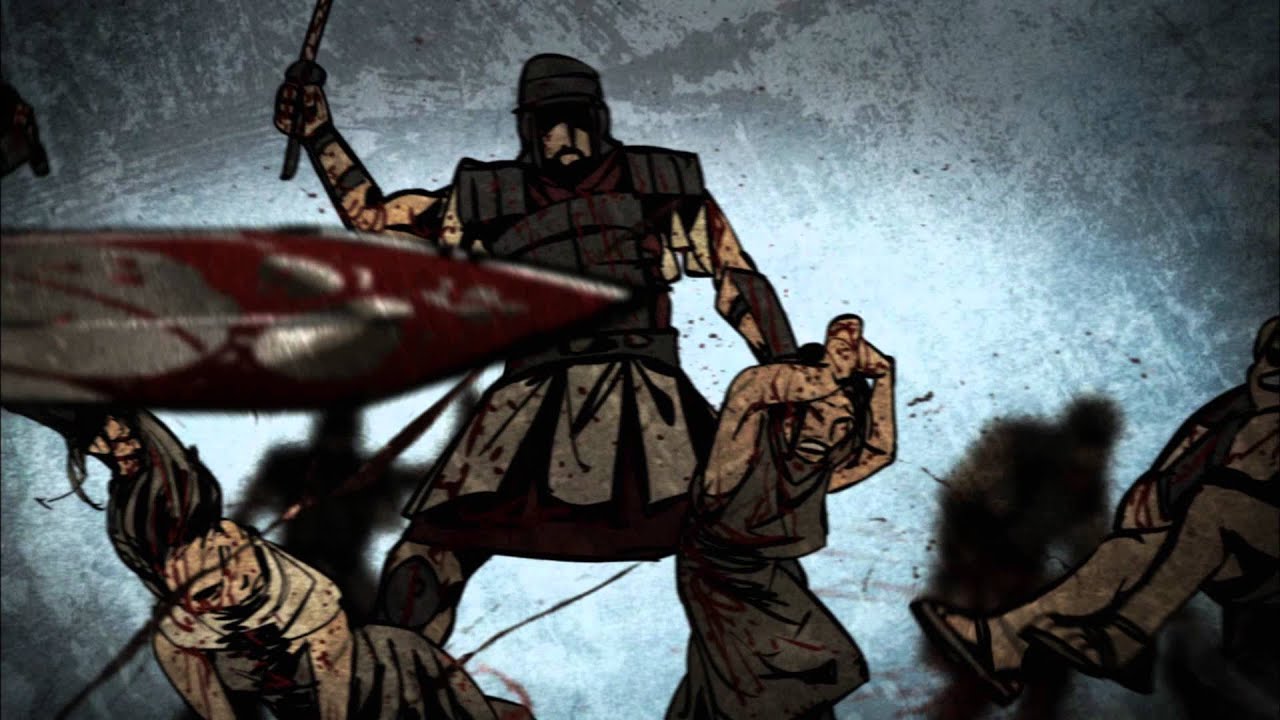
Produced by History Channel, Ancients Behaving Badly is supposed to be educational but is, in actuality, infotainment.  Done up as a scandal show, replete with dramatic (and sometimes over the top) narration, the show's style is lurid and sensational and, consequently, quite entertaining.  The production is generally excellent (though the computer animated recreations of the subjects' faces looks a bit goofy) and features really well-done graphic novel-style animations of each subject's darkest moments that are appropriately creepy, sinister and/or horrific (e.g., comic book blood sprays):


Also good is the ancillary information that the viewer learns about the life and times of each subject (most are from the Iron Age) as they rise in power.  As with similar History Channel offerings, Ancients Behaving Badly covers the contemporary political and military history, and the discussion of military weapons and technology is quite good, such as the ballista:


Each show ends with the historical figure being analyzed by an "Ancients Behaving Badly Psychograph." The y-axis rates them from "goal driven killer" to "psychopathic murderer", while the x-axis measures individual pathologies.  The subject is then compared to other miscreants, ancient and modern.

Sounds good, right?

Well, Ancients Behaving Badly turns groan worthy when it comes to historical accuracy.  Beyond run of the mill problems, such as misquoting names and dates, where the show really falls down is when it misleadingly suggests rumor and innuendo as fact: For example, in the episode on Nero, Ancients Behaving Badly repeats the myth that Nero fiddled while Rome burned.  The guy actually did plenty of terrible things, so there's no reason to perpetuate politically motivated falsehoods two millennium after the fact.

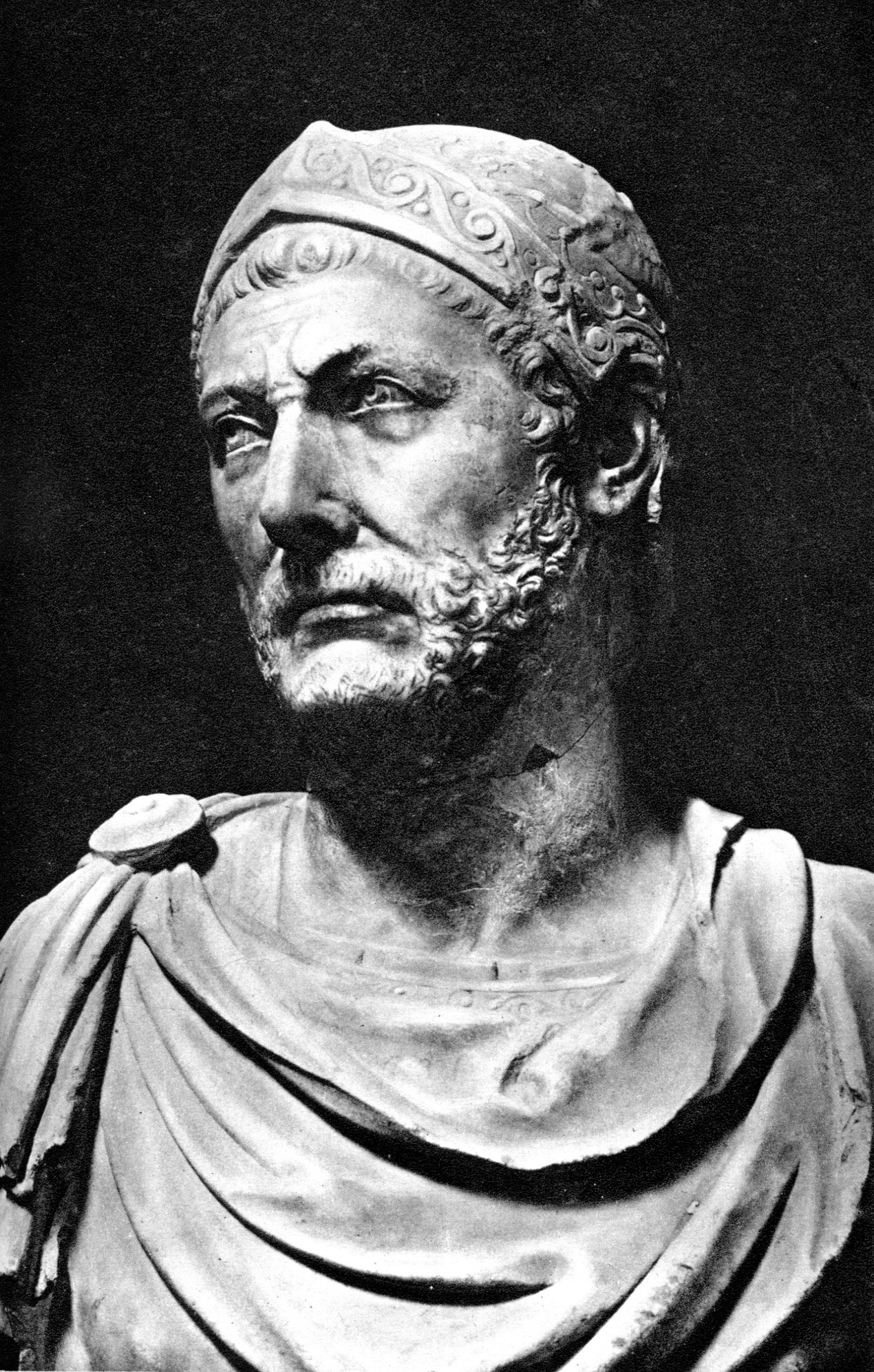
Moreover, sometimes Ancients Behaving Badly veers straight into character assassination: For example, in the episode on Hannibal Barca, the show begins by asking "Was Hannibal a great general or just a ruthless killer?"  Given that the Carthaginian was arguably the greatest military commander of all time, this is a ridiculously loaded question:


To rise to the top of power like these people did, the subjects had to be ruthless and do some terrible things, so there's real material to use for a show like this.  Consequently, there's no reason to stoop to the level of a political attack ad.


Overall, I did personally like Ancients Behaving Badly and I really want to give the program some love because K's dad is one of the regular contributors!  However, I'm leery of giving the show a high rating because it's hard for a casual viewer to distinguish between fact and opinion (or outright fiction).


SC's Parting Shot: 5 of 10

Thursday, September 18, 2014

TV Review: Engineering an Empire (2005-07)

I wanted to express some love for the television program Engineering an Empire:


A big reason that I've set my Olde School Dungeons & Dragons campaign in a Sword & Sorcery version of Earth is that this both provides the players with instant basic familiarity and serves as a shortcut to establishing setting verisimilitude.  In fact, R.E. Howard used the same reasoning in placing his Kull and Conan stories in the Hyborian Age.

Produced by History Channel, Engineering an Empire is a great tool for learning more about some of history's greatest empires.  It's a fun and informative program that's easily accessible to non-engineers, covering some of the tools, structures, inventions and other technical advances that helped each featured nation rise to power.  The show also does a good job of grounding the innovations in context (e.g., political, military, economic, etc.) by following various important personages who utilize said innovations as their empire develops.

While not all of the episodes are about ancient empires, Engineering an Empire still covers the heavyweights of the Bronze Age and the Iron Age (e.g.,  Egypt, China, Greece, Persia, Rome, etc.)    The quality of the episodes is a bit uneven (the ones covering Egypt and Rome are probably the best), but the show is still quite solid overall.  Familiarity with the technology gives Dungeon Masters and other would-be world builders a great way to better understand these empires from a very practical and tactile point of view.  Moreover,  the show is filled with plenty of other background details to help bring these great powers to life at your gaming table (or elsewhere).

I also really got a kick out of seeing Peter Weller, Robocop himself, as the host!


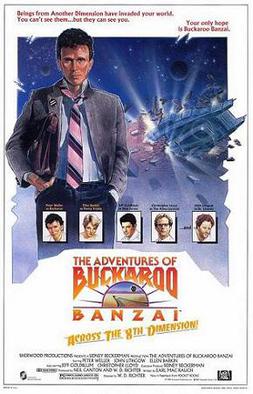
Messr Weller, who picked up a Master's degree in Roman and Renaissance Art at Syracuse University and then a Ph.D. at UCLA in Italian Renaissance art history, spends some time as an adjunct faculty member at Syracuse University, where he is apparently "a very popular professor and his classes are rated by students as 'difficult' and 'not easy'."  I suppose it's something of a case of life imitating art, as Weller was a professor in his other iconic movie role:


So, if you're an antiquity buff, gear head, Sword & Sandal fan or are just have a bit of intellectual curiosity, I think you'll find that Engineering an Empire is an entertaining pop history mix of facts and technology.

SC's Parting Shot: 9 of 10