Showing posts with label Reviews. Show all posts

Thursday, May 14, 2015

Movie Review: The Lost Bladesman (2011)

Although the Three Kingdoms period of Chinese history is a popular subject in East Asian media,  most epic dramas suffer from being overly melodramatic or underwhelming as actioners.  Starring Donnie Yen, arguably the finest martial artist in films today, I wanted to give a shout out to an under appreciated historical action flick that deftly avoids both problems, The Lost Bladesman:


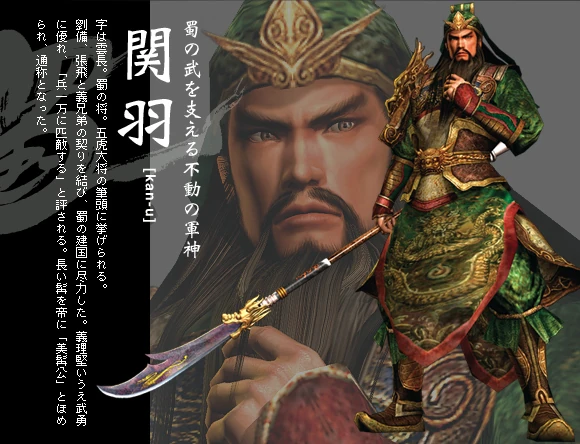
In the Romance of the Three Kingdoms, few heroes loom as large as the legendary warrior Guan Yu.  Not only is he a peerless fighter, armed with an imposing signature weapon (The Green Dragon Crescent Blade (青龍偃月刀), though this may be anachronistic since there's no proof of that the guandao was invented prior to the 11th century), he's also seen as a paragon of loyalty and righteousness.  In fact, the dude is actually worshipped in many parts of East Asia (e.g., there's a shrine to him in every police station in Hong Kong)!

Thus, it it unsurprising that he has been celebrated in numerous books, films, video games and other media for two millennia.


Although Guan Yu is a historical figure, since he was popularized in the Romance of the Three Kingdoms, which is a mix of fact and fiction, many of his most famous tales of derring-do are myths.  Such is the case with The Lost Bladesman: Based on the fictional story of Guan Yu crossing five passes and slaying six generals, the film actually begins with the great warrior's funeral in 220 and is told by his frenemy Cao Cao, the prime minister of the Han Dynasty.

Quickly, the action reverts back 20 years to the Battle of Baima (白馬之戰), where Guan Yu temporarily allies with Cao Cao and defeats a common enemy.  The prime minister showers the warrior with title and treasure to try to win the latter's loyalty.  However Guan Yu stays true to his sworn brother, the rebel warlord Liu Bei.


Thereafter, Guan Yu battles his way back to rejoin Liu Bei's army, facing both deadly foes and cunning treachery.  However, it is treachery that ultimately defeats the undefeatable warrior, as Cao Cao muses at the end of the film that such a hero is ultimately a tool to be sacrificed by his sworn brother in such chaotic times.

As a period piece, The Lost Bladesman is a finely crafted reimaging of the source material, with lush cinematography, and avoids being ponderous or overly serious.  Donnie Yen proves his dramatic chops and carries the show admirably.  The feel of the movie is realistic and lived in.  Also, like a good Greek tragedy, the characters are driven by their strengths (duty and honor) into conflict, and Guan Yu's opponents are more than just 2D cutouts.

As an action film, this movie kicks ass, a lot of it:


As action director, Messr Yen is equally strong.  Each combat features different fighting styles and signature weapons.   Guan Yu is clearly a badass, but his feats never break the viewer's verisimilitude or cross the line into cartoonishness.

If you like Iron Age action films, The Lost Bladesman is at the top of the heap.  Plus, it's worth it just to see someone able to wield a guandao with such aplomb!


SC's Parting Shot: 9 of 10

Thursday, May 7, 2015

Literature Review: Maureen Birnbaum, Barbarian Swordsperson (1982)

In the annals of Fantasy literature, successful comedic works written to be intentionally humorous are rare, although unintentionally comedic ones can certainly be tear jerkingly funny.  Of the former, one of the cleverest standouts in the field is Maureen Birnbaum, Barbarian Swordsperson by George Alec Effinger:


Spoofing the Barsoom Series (a.k.a. The John Carter of Mars Series) by Edgar Rice Burroughs, Maureen Birnbaum, Barbarian Swordsperson follows the adventures of the titular character, as chronicled by her best friend Bitsy Spiegelman. A la John Carter, in this short story, Maureen "Muffy" Birnbaum is mysteriously whisked away to Fantasy Mars, finds she has fantastic abilities due to being an Earthwoman and slays a giant monster with her sword (nicknamed 'Old Betsy').

One small issue, however, is that, while Muffy may have been transported to Mars, her clothes were not:

I was cold because-we're just going to have to live without ice, I think, Bitsy, because this hotel probably has a goddam policy against it or something, so just pour it in the glass-I was standing there in the proverbial buff!

Despite being au naturel, Mlle Birnbaum saves Prince Van and gets marginally more clothes.


Messr Effinger writes a lively yarn, filled with easy wit, that turns the Damsel in Distress trope on its head, by having the Martian prince be helpless.

Furthermore, much of the comedy derives from the fact that, flying in the face of the genre conventions, the protagonist is a beautiful, well-meaning and affluent young woman who's obsessed with fashion and the like, a la Cher from Clueless (1995):


For example, Mlle Birnbaum is shocked, I say, shocked, to find out that there no malls in Fantasy Mars!  Consequently, the reader gets a two-for-one deal on satire, as the author deftly skewers both Sword & Planet and privilege at the same time.

Unsurprisingly, the inspiration for the story came when Messr Effinger was enjoying a cheeseburger, fries and large coke at a college hangout and overheard the conversation of four Tulane co-eds:

The conversation ran the entire emotional gamut from sweaters to-God forbid-Peter Pan collars.  And they spoke in frequent italics.  You could just hear them chiming.


Maureen Birnbaum, Barbarian Swordsperson is great fun, and, as you might expect, as Mlle Birnbaum continues her misadventures in later stories throughout other genres, including Isaac Asimov's Nightfall and Lovecraftian Horror!  A humorously original gender-swapping take on Planetary Romance, this short story is a modern classic and a well worth a read!


SC's Parting Shot: 9 of 10
Thursday, April 9, 2015

Literature Review: Ozymandias (1818)

Just wanted to mention that this blog has reached the six month mark!  Woo hoo!

On the subject of time, in the annals of literature in the English language, few masterworks are as eloquent or as memorable as the sonnet Ozymandias by the great Romantic poet Percy Bysshe Shelley:

Look on my works, ye Mighty, and despair!

Although perhaps overshadowed in the minds of modern audiences by his second wife Mary Shelley, the author of Frankenstein, Percy Bysshe Shelley is considered one of the greatest lyric poets of all time, despite his tragic death in a boating accident before his 30th birthday.  And he shows why in Ozymandias.

In a friendly competition with Horace Smith, a member of Shelley's literary circle, both men produced poems named Ozymandias about Ramesses II, widely regarded as the greatest and most celebrated of the pharaohs of ancient Egypt, (Ramesses II is called Ozymandias in the Hellenic sources, from a transliteration into Greek of a part of his throne name), with both works using the same theme and story.  However, the character in the all-time great graphic novel Watchmen is named in reference to only one of these.


Written in loose iambic pentameter, Ozymandias explores the theme of monumental ambition struggling with and ultimately laid low by the relentless ravages of time.  Full of wry and ironic humor yet still simultaneously poignant, Shelley also uses vivid imagery to capture the imagination:

Two vast and trunkless legs of stone
Stand in the desert. Near them, on the sand,
Half sunk, a shattered visage lies, whose frown,
And wrinkled lip, and sneer of cold command,
Tell that its sculptor well those passions read
Which yet survive, stamped on these lifeless things

With such wonderfully evocative language, it is hardly surprising that Ozymandias, unlike the subject of the poem, has ironically become a timeless classic, inspiring and referenced in everything from music to video games.  Here is a wonderful reading of the poem by Bryan Cranston, in a trailer for "Ozymandias", the third to last episode of Breaking Bad:


In only 14 lines, Percy Bysshe Shelley creates a work for the ages.  If you've got a minute, take a look.  If you've got a few more, it's a fun and worthwhile exercise to think on its multiple meanings.


SC's Parting Shot: 10 of 10

Thursday, March 26, 2015

Movie Review: Legend of Lemnear (1987)

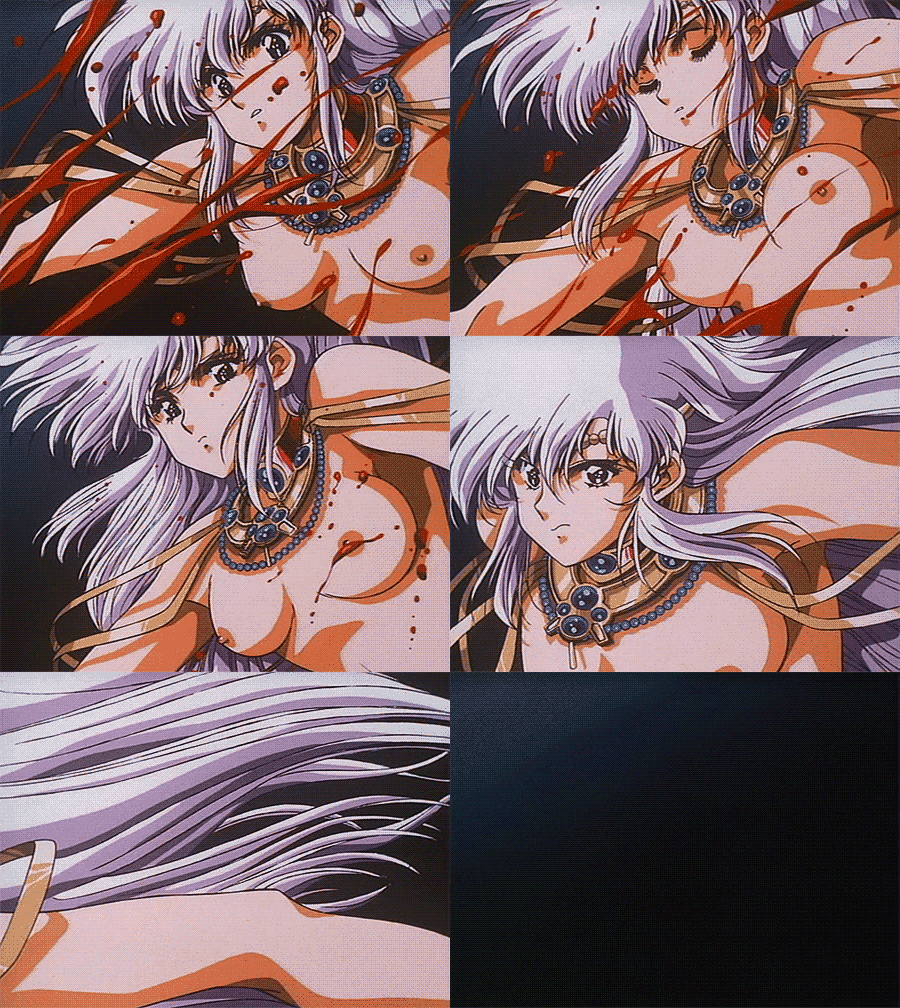
A somewhat forgotten gem, Legend of Lemnear is one of the earliest anime entries in the Sword & Sorcery genre and it holds up as breezy fun despite the decades.


Legend of Lemnear is a ripping Sword & Sorcery yarn wherein the titular protagonist seeks vengeance against the evil wizard who slaughtered her family and city.  There are strong parallels to Taarna the Taarakian warrior from the Heavy Metal film, except that Lemnear starts off as a stone cold badass and stays that way for the entire film.

As you might expect from an original animated video (OAV) with a runtime of only 45 minutes, the plot is thin and there are some noticeable holes.  However, this failing is not uncommon for anime from the 80s.  Much better are the animation and the character designs, which are also a product of the time (mullets ahoy!), but have aged reasonably well.  Most importantly, like any good S&S story, the pacing is quick, the action is fast and furious and there's noticeable appreciation of the female form.  


As a Hard "R", obviously Legend of Lemnear isn't for little kids or prudes.

However, as female protagonists go, Lemnear is pretty damn awesome: she doesn't take crap from anyone, she's the best fighter in the story and she saves the day.


That puts her in pretty rare company and she precedes Lina Inverse by two years.

This movie is also pure metal!  From the hard rock soundtrack to the copious amounts of violence to the big hair, Legend of Lemnear cranks the amps up to 11 and doesn't stop until the movie ends with a giant explosion.  The visuals are fantastic (pun intended) and, unsurprisingly, the villain has a giant floating castle shaped like a skull!  How cool is that?

If you're the sort of person who is offended by chainmail bikinis, this is not the movie for you.   If you're the sort of person who can't tell the difference between High Fantasy and Sword & Sorcery, this movie may not be for you.   However, if you're the sort of person who wants to see what a Frank Frazetta painting would look like as a fun, roaring anime adventure, Legend of Lemnear is well worth your time!

SC's Parting Shot: 7 of 10

Thursday, March 19, 2015

Video Game Review: The Return of Heracles (1983)

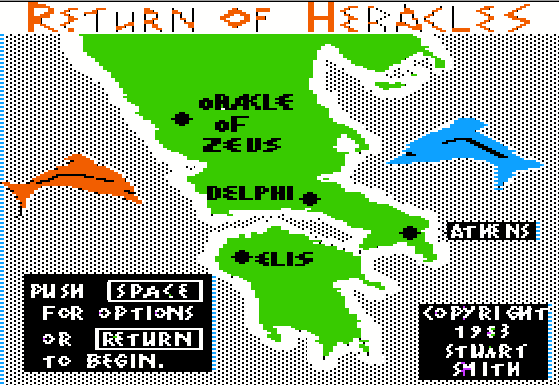
In the halcyon days of the 1980s, there were few computer roleplaying games (CRPGs) that weren't derivative of Tolkien and/or Dungeons & Dragons.  Fewer still sought to provide any kind of educational value for their players.  One of few CRPGs that excelled in both areas was The Return of Heracles by Stuart Smith.


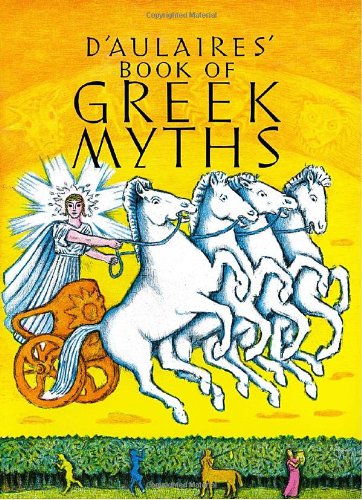
Set in Bronze Age Greece and based on some the most famous tales from Greek mythology, in The Return of Heracles the player(s) assume control of one or more legendary or historical heroes, including Achilles, Jason, and mighty Heracles! Tales of these mighty men and women (and animals) have thrilled audiences for millennia, including myself.  In grade school, I read the fantastic D'Aulaires' Book of Greek Myths many, many, many times at the local library.


In order to win the game, the player(s) must complete a dozen tasks which, as one might expect from the title, are drawn mostly from the Labors of Heracles, but also include other classics from Greek mythology, such as solving the Riddle of the Sphinx and retrieving the Golden Fleece.  Upon completion, the player receives points (with bonus for speed) and usually gets an in-game treasure, buff or other reward as well.


The game mechanic is simple but straightforward and adds to the breezy fun.  The soundtrack, though technologically an artifact of its day, is apt and evocative.  And, the open sandbox design of the game world avoids railroading, a common problem for many CRPGs even to the present day.


Messr Smith's humor and cleverness are evident throughout The Return of Heracles.  There are 250 NPCs with individual stats, factions and motivations, such as Inebriated Thief and Not-very-smart Thief.   And just walking through a door can be hazardous!


Original, colorful and full of obvious admiration of the source material, this game is a masterwork.  If you're a lover of Sword & Sandal or Greek mythology, The Return of Heracles is perhaps the best CRPG of the era and even if you only have a passing interest, it's worth a look.  So strap on your greaves and hark back to a time when gods and monsters roamed the land.

But do avoid giving an obolus to Charon.

SC's Parting Shot: 10 of 10

Thursday, March 5, 2015

Movie Review: The Sword and the Sorcerer (1982)

Sometimes, when I revisit a fondly remembered film from my youth, said film holds up despite the passage of time.  Sometimes, it doesn't.  The Sword and the Sorcerer falls into the latter category.


Not having seen The Sword and the Sorcerer in decades, I was hoping that this would be a masterwork, ala Conan the Barbarian (1982), even thought all I really remembered was Talon's *THREE* bladed sword, whose parallel blades shoot off!  Woo-hoo!  Seriously, at the time, I thought this sword was one of the coolest things ever.

However, on the re-watch, I found that the poor fight choreography, the preponderance of clichés, the special effects that haven't aged well and the easily correctable script problems were off-putting: For example, it's not spelled out, but Talon banging Princess Alana was probably incest.


Still, to be fair, The Sword and the Sorcerer is certainly not a poor Sword & Sorcery yarn.  I mean, there's a sword (with *THREE* blades!?!) and a sorcerer, can't be much more Sword & Sorcery than that, right?  Plus, it's got a hot princess (the super lovely Kathleen Beller), the requisite gore, violence and nudity for a Hard "R" and a story that zips along and that remains interesting, if sometimes goofy, throughout.

In The Sword and the Sorcerer, evil King Cromwell seeks to conquer the known world by resurrecting Xusia of Delos, an evil archmagus.  Team Evil's path to global domination begins by knocking over the peaceful Kingdom of Ehdan and murdering all of the Ehdanian royal family except for the youngest son, Talon, who gets away with the *THREE* bladed sword.  Then, Cromwell makes the smart play of trying to assassinate Xusia before the sorcerer inevitably turns on him.


Unfortunately, Cromwell mucks up the assassination and Xusia escapes.  Years later, both the surviving wizard and the surviving prince, now a famous mercenary leader, return to Ehdan to seek their vengeance.  The movie ends pretty much as you would expect.

Where The Sword and the Sorcerer is more impressive is how it differs from the host of other post-Conan fantasy action films: drawing much from Errol Flynn swashbucklers, the film laced with humor and Talon is as likely to fire off a quip as swing his sword.  Also, the double villain structure allows for some clever treachery and backstabbing.  And, the princess shows more spunk than the typical helpless damsel, using the patented knee to the balls technique.


Plus, Lee Horsely is a much, much, much better actor than Arnold Schwarzenegger.  For example, Messr Horsely plays Talon with easy wit and good comedic timing.  And director Albert Pyun isn't afraid to go after the laughs either: after the rousing "let's go save our leader" speech in the brothel, the movie immediately jump cuts to the would-be rescuers in the dungeon.  Hi*LAR*ious!

If you're looking for a fun, campy pulp action film and are willing to relax your brain, The Sword and the Sorcerer isn't a bad choice.  Alternately, if you want to see a sword with *THREE* blades, this is the movie for you!

SC's Parting Shot: 6 of 10

Thursday, February 26, 2015

Meta Review: Chess.com's Everything You Need to Know About Chess (2011)

I wanted to give a shout out to the best and most concise review of Chess that I've ever seen, Everything You Need to Know About Chess.  Created and narrated by International Master Daniel Rensch for Chess.com, this video series does the seemingly impossible: pare the essential knowledge about the Game of Kings down to less than an hour!  That the series also pulls off this herculean task in a clear, fun and engaging manner is the cherry on top.


Considered by many to be the finest and most respected strategy game of all time, the modern version of Chess is believed to have originated in 6th century India.  In the millennia since, the Game of Kings has been played, debated and dissected by leaders of all stripes, scholars and enthusiasts.  As you might expect, the game has a rich history filled with colorful figures, such as Paul Morphy and Bobby Fischer, and moments of true genius.


Aimed at 90 percent of players, Everything You Need to Know About Chess does assume that you have the bare minimum knowledge to play (i.e., you know how each piece moves, you know the relative value of each piece, you know how to castle, etc.), but then it provides a staggering amount of strategy, tactics, guiding principles and background information in a short period of time that lets you approach the game in a more systematic and enlightened manner.  Produced by the fine folks at Chess.com, the world's most frequently visited chess website, Everything You Need to Know About Chess is broken up into several parts: The Opening, Tactics & Strategy, The Endgame, as well a couple of summary and supplemental videos.  This meta review highlights the first three videos:

  • The Opening


This video stresses the importance of development, center control and other principles that are key to strong openings.


  • Tactics & Strategy


This video covers the most fundamental tactical patterns: forks, pins and skewers.  It also covers pawn structures and key types of checkmates.


  • The Endgame


This video highlights king activity and pawn play.


In terms of return on time invested, I don't know that you'll find a better deal than Everything You Need to Know About Chess.  If you can absorb and effectively utilize the information in just the three videos above, for most people, your game should improve by at least a level.  In addition, the series also provides a great springboard for further study of chess theory.

Game on!

SC's Parting Shot: 10 of 10

Thursday, February 19, 2015

Movie Review: Detective Dee and the Mystery of the Phantom Flame (2010)

春節快樂!

In honor of Chinese New Year (aka Spring Festival), I wanted to give some props to my favorite Chinese action mystery film, Detective Dee and the Mystery of the Phantom Flame:


Set in Tang Dynasty China, at the beginning of the reign of Wu Zetian (武則天), the first and only Chinese empress to rule in her own name, the country is rife with plots and intrigue against the throne.  After a couple of officials spontaneously combust (the titular flame), the Empress releases her old foe, former imperial magistrate and rebel Di Renjie (狄仁傑, the titular character), from prison and orders him to get to the bottom of this baffling mystery.  This, of course, is easier said than done, not only because of the tangled schemes of the Empress and other political factions, but also because Di's own assistants, Officer Shangguan Jing'er and Officer Pei Donglai, have interests that are not entirely aligned with the good detective's.  The result is an excellent series of twists and turns where you're not sure who's playing whom.

Like Guy Ritchie's excellent Sherlock Holmes films, to which it is often favorably compared, Detective Dee and the Mystery of the Phantom Flame is a multi-genre reimagining of a classic character, who in turn is based on the actual Di Renjie, a celebrated Chinese official.


Directed by the acclaimed Tsui Hark and with a large (by Hong Kong standards) budget, Detective Dee and the Mystery of the Phantom Flame is a lavish historical thriller that works as both a detective movie and a martial arts flick.  The set and costume design are gorgeous, while the story is breezy fun with just the right amounts of suspense, spookiness and mysticism.  And with the legendary Sammo Hung as action director, you know the fight choreography will be top notch.


Leading a stellar cast, the great Andy Lau plays the titular detective with intelligence, wit, and aplomb.  Furthermore, to prepare for his role in the film, Lau studied criminal psychology, which adds to the verisimilitude as Detective Dee conducts his investigation.  In addition, giving the detective a strong cast of characters to play against elevates the work: Detective Dee's verbal jousts with the Empress, played by Carina Lau, Andy's wife, in her first film role in four years, are some of the best scenes in the movie.


All in all, Detective Dee and the Mystery of the Phantom Flame is an excellent film.  If you would like to watch a Chinese martial arts film or historical drama with unexpected depth and superb execution, you could do a lot worse than this gem.

恭喜發財!

SC's Parting Shot: 9 of 10

Thursday, February 12, 2015

Movie Review: The Last Unicorn (1982)

I wanted to give some love to a wonderful but somewhat forgotten classic animated film, The Last Unicorn:


Adapted from the novel with a screenplay by the original author, The Last Unicorn follows the title character as she leaves the safety of her forest to discover what happened to her people.  Through various twists and turns, the Unicorn learns more about herself and the wider world than she thought possible or that she bargained for, and the ending is both bittersweet and something of a surprise.

Although ostensibly a children's film, The Last Unicorn is, in fact, a far more mature and richly layered narrative that is, by turns, a coming of age story, a mystery, a romance and a stirring tale of heroism.  This movie is a fairy tale, but it's more in the mold of the Brothers Grimm.  For example, there are moments filled with sorrow and bitterness that you'll never see in a Disney film, such as Molly Grue's lament upon meeting the Unicorn:
Molly: No, it can't be! Can it be? Where have you been? Where have you been? Damn you! Where have you been? 
Schmendrick: Don't you talk to her that way! 
Unicorn: I'm here now. 
Molly: And where were you twenty years ago? Ten years ago? Where were you when I was new? When I was one of those innocent young maidens you always come to? How dare you! How dare you come to me now, when I am THIS?! [Weeps]


Moving stuff.

The film also isn't afraid to bring the dark, such as when the Harpy kills Mommy Fortuna by ripping off the latter's face:


You'll never see THAT in a Disney film, either.

From top to bottom, this is a fantastic film.  Produced by Rankin/Bass, the guys that made the iconic animated versions of J. R. R. Tolkien's The Hobbit and The Return of the King, the animation in The Last Unicorn is stylistically similar but qualitatively superior to those other films, which is unsurprising since it was done by Topcraft, a company that was bought out of bankruptcy by its top flight talent and turned into Studio Ghibli.


The movie also boasts an all-star vocal cast, including Mia Farrow, Jeff Bridges, Alan Arkin and, Saruman himself, Christopher Lee, who are all excellent, bringing depth and distinct personalities to their roles.  Furthermore, the mellow but melancholy soundtrack, performed by America, fits perfectly.

Like all the best "Young Adult" fiction, The Last Unicorn always treats its audience with intelligence and respect.  It is unafraid to ask tough questions and demand tough answers.  For example, the Unicorn learns that the world can be hard and unfair, even if or, indeed, because you've done the right thing.

I recommend this movie not only to speculative fiction fans but anyone who likes challenging, engaging and though provoking media.

SC's Parting Shot: 10 of 10

Thursday, January 29, 2015

TV Review: Korgoth of Barbaria (2006)

I wanted to give some love for a great "What if?", Korgoth of Barbaria


"The Great Cities have risen and fallen. Civilization's grip on mankind has grown weak and arthritic. Dark forces seek to renew forgotten covenants, and primordial beasts reclaim the wilderness. Out of the frozen north, a man emerges - a man of a barbaric age, whose merciless savagery may be the only key to his survival. They call him Korgoth!"

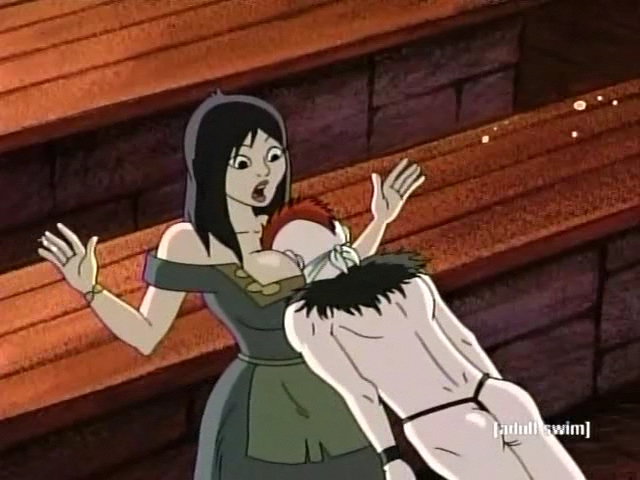
Produced by Cartoon Network for Adult Swim, Korgoth of Barbaria is set in a post-apocalyptic future Earth that's very likely inspired, in part, by the classic cartoon Thundarr the Barbarian.  Korgoth's world is grim, violent, dirty and sexy, sometimes all at once:


This show is metal, and I'm not just talking about the hard rock intro and soundtrack.  The violence is copious and WAY over the top.  The men are various shades of ugly, while the women are all lovely, voluptuous and highly sexualized.  Pretty much every frame of Korgoth of Barbaria could have been ripped from the pages of Métal Hurlant (known in America as Heavy Metal Magazine).

Like the similarly ridiculously awesome Black Dynamite (2009), Korgoth of Barbaria deftly veers between homage and parody.  On the one hand, the story works fine as a ripping Sword & Sorcery yarn, where the Conan-esque protagonist cleaves his way through mooks and monsters, beds a lusty wench and battles an evil sorcerer.  On the other hand, the show, as the tongue-in-cheek title suggests, also is clearly having a fun time in the process.  For example:

Scrotus: You! You will regret what you have done this day. I will make you regret ever being born! You're going to wish you'd never left your mother's womb, where it was warm, and safe, and wet. I'm going to show you pain you never knew existed. You're going to see a whole new spectrum of pain, like a rainbow! 
Hargon: You tell 'em Scrotus! [screams as Korgoth crushes his head some more] 
Scrotus: But! This rainbow...is not just like any other rainbow, it's… [gets interrupted by Korgoth ripping his skin off]


The production values, writing and direction for this show were great.  Diedrich Bader's gravelly voice is perfect as the titular character, bringing just the right amounts of world weariness, wit, menace and humor.  It's a madcap thrill ride where the viewer never knows what to expect- "They're riding giant pigeons?"

Despite critical acclaim and strong fan support, Cartoon Network reversed its decision to pick up Korgoth of Barbaria and canceled the show after only the pilot episode.  Apparently, it was too expensive to continue.


So, all we are left with is this pilot episode and we can only imagine what might have been.  Still, any fan of Sword & Sorcery would do themselves a disservice if they didn't take a look at this fun and funny modern take on the genre.

SC's Parting Shot: 9 of 10
Thursday, January 8, 2015

Movie Review: Ninja Scroll (1993)

I wanted to give a shout out to my favorite animated film of all time, Ninja Scroll:


Better known in its native Japan as "獣兵衛忍風帖," Ninja Scroll is a stunning accomplishment.  Visually breathtaking, with a dark, twisted mystery and a tough-as-nails protagonist that would make Raymond Chandler proud and filled with explosive action, rich details, a wry sense of humor and interesting characters, this is a great story.  Full stop.

The plot follows wandering adventurer Kimagabei Jubei (牙神 獣兵衛), as he inadvertently becomes embroiled in a plot by an old enemy that will determine the fate of Japan.  Ninja Scroll has ninjas, samurai, super spies, demons, dark sorcery, and even pirates (sort of).  The only thing it doesn't have is a scroll.


As far as I can tell, that's the ONLY problem with Ninja Scroll.  Blending fiction and historical fact, the film is set in a well realized Fantasy Japan that's logical and internally consistent.  This logical bent extends to the superb character design, where the characters' skills and abilities make internal sense, are consistent, and sometimes take the story in unexpected directions.  Furthermore, the characters' flaws and foibles make them three-dimensional and relatable and also take the story in unexpected directions as well.

Writer/Director Kawajiri Yoshiaki's (川尻 善昭) attention to detail is outstanding and pays off in really inventive ways, such as the wire connected to Jubei's sword.


Also, the various plots within plots would make Frank Herbert proud.

Even if characters and the story were dumb (which, thankfully, is not the case), the fight scenes themselves are worth the price of admission.  As Jubei and his unexpected companions, Kagero and Dakuan, battle the Eight Devils of Kimon (鬼門八人衆), combat features gory splatterfests, chess-like strategy, clever misdirection and just about everything in between.  Jubei may be  a master swordsman and ninja, but the Devils of Kimon have him clearly outgunned and our reluctant hero only manages to triumph through various combinations of trickery, teamwork and luck.  Fight choreography is uniformly excellent.

As fair warning, Ninja Scroll does feature more than a little graphic sexual content, but such is part of the story and never simply for the cheesecake factor.  Personally, I think it adds to the sense of this bold, no-holds barred style of storytelling.


I've loved this movie to bits ever since it was released on VHS.  And the quality of the art and the story is such that it still holds up well after more than two decades.  Truly a masterwork.

SC's Parting Shot: 10 of 10

Thursday, January 1, 2015

Literature Review: The Eye of Argon (1970)

Happy New Year!

Let's ring in 2015 with a look back at one of the most well known and best loved Sword & Sorcery stories.  In the annals of S & S, there are masterworks, such as the Conan the Barbarian stories by R.E. Howard and the Kane the Mystic Swordsman stories by Karl Edward Wagner.  And then there is The Eye of Argon:


Although described as the "worst fantasy novel ever," The Eye of Argon is actually a quite serviceable, if derivative, heroic fantasy story.  This ripping yarn follows Gringr the Barbarian and his misadventures in the civilized lands and is, in fact, a reasonable pastiche of a Conan story.

However, what puts The Eye of Argon solidly in the "So Bad it's Good" category is Messr Theis' florid choice and misuse of language.  Combined with numerous typos and misspellings, the reader can't help but burst out laughing.  For example:

The enthused barbarian swilveled about, his shock of fiery red hair tossing robustly in the humid air currents as he faced the attack of the defeated soldier's fellow in arms. 
"Damn you, barbarian" Shrieked the soldier as he observed his comrade in death.

The reader can tell Messr Theis understands the basic tropes of S & S.  This combines with his misunderstanding of various other things (such as the definition of "slut"), his purple prose, and Theis' obvious enthusiasm and transforms into comedy gold.


Here is one of my favorite parts of the story:

The girl gasped a tortured groan from her clamped lungs, her sea blue eyes bulging forth from damp sockets. Cocking her right foot backwards, she leashed it desperately outwards with the strength of a demon possessed, lodging her sandled foot squarely between the shaman's testicles. 
The startled priest released his crushing grip, crimping his body over at the waist overlooking his recessed belly; wide open in a deep chasim. His face flushed to a rose red shade of crimson, eyelids fluttering wide with eyeballs protruding blindly outwards from their sockets to their outmost perimeters, while his lips quivered wildly about allowing an agonized wallow to gust forth as his breath billowed from burning lungs. His hands reached out clutching his urinary gland as his knees wobbled rapidly about for a few seconds then buckled, causing the ruptured shaman to collapse in an egg huddled mass to the granite pavement, rolling helplessly about in his agony.


Over the decades, criticism of this story has gone overboard.  Messr Theis was 16 years old when he wrote this story.  For a fanzine.

I can recall writing some pretty craptastic things at that age, too.  His story being continually mocked hurt Theis and he never wrote any more fiction.


As an example of this dogpiling, some people have poked fun at the drawings that were in the original fanzine (that were not even drawn by Theis).  However, these illustrations generally aren't that bad for a fanzine:


Especially considering what passed for professional art in Original Dungeons & Dragons:


Both beautifully terrible and terribly beautiful, The Eye of Argon is an inadvertent work of mad genius, a la Plan 9 from Outer Space.  Any Sword & Sorcery fan with a sense of humor would be well served to take a look.

新年快樂!

SC's Parting Shot: 9 of 10

Thursday, December 25, 2014

Meta Review: Heir's Battle Basics

Merry Christmas!

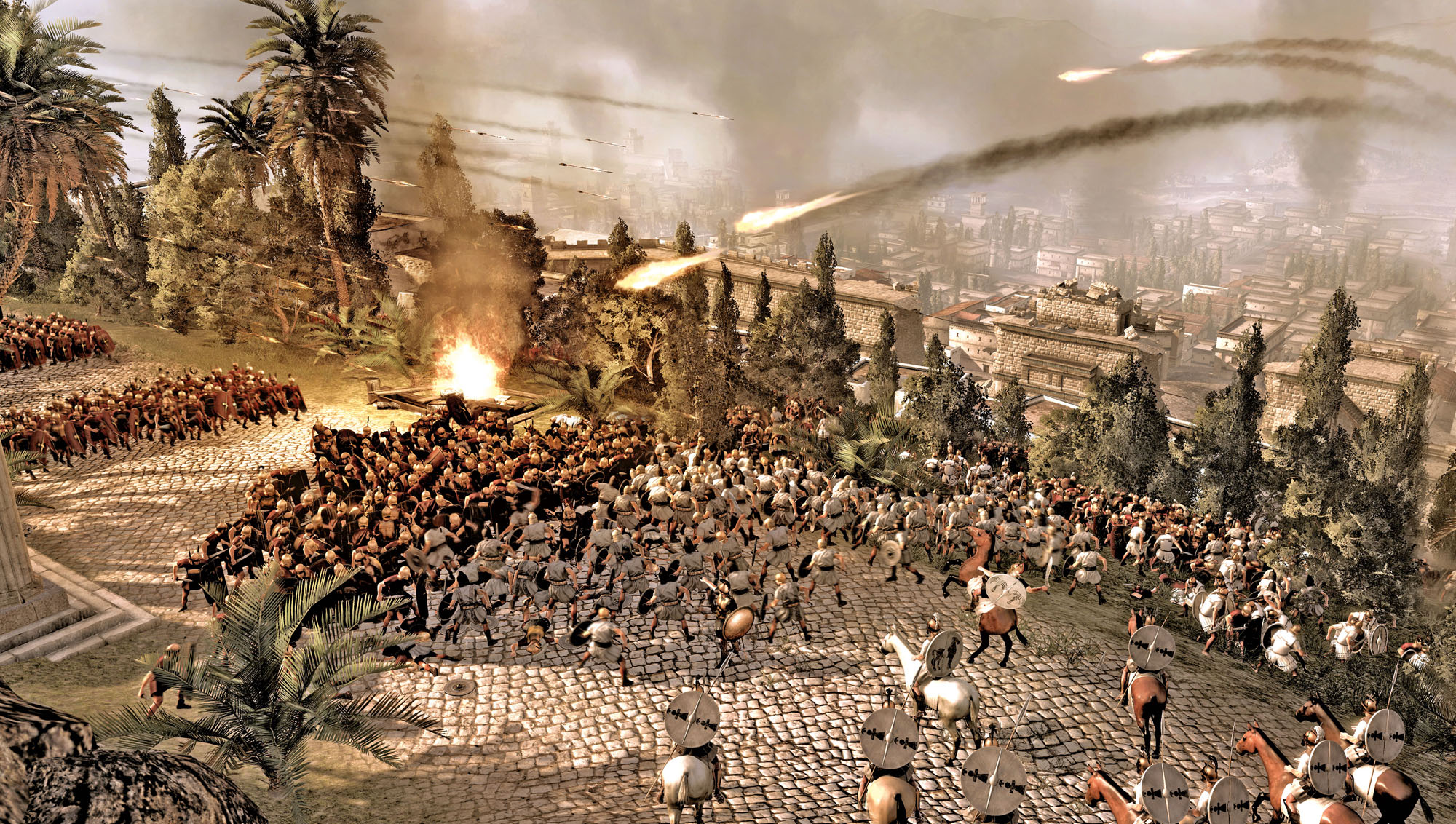
Let's celebrate the birth of the Prince of Peace with another helping of Total War: Rome II goodness:


In terms of beginnings, Heir of Carthage has a couple of good videos specifically aimed toward newcomers to Total War: Rome II that I wanted to discuss. Of course, you can pick up a significant amount of knowledge en passant by simply watching his online battles and such, but these videos approach the subject in a more systematic manner.  The first covers Army Selection Tips:


This video is designed for people who are beginners in the truest sense of the word, but Messr Heir does his typical excellent job of clearly and comprehensively explaining how to put together an army in Total War: Rome II.  He also prefaces the video by stating, "There is no one good army and there is no one good faction."  Messr Heir breaks down the various unit types, their different statistics, and comparative strengths.  He also briefly discusses how you might use certain units to your advantage in different situations.  Included is a quick battle where he attempts to illustrate these points.


As a companion to the first video, Heir of Carthage also put out another video covering Battle Basics, the basic mechanical issues for running a battle in Total War: Rome II:


In addition to expounding on some details from the first video (such as explaining various unit special abilities), here Messr Heir clearly explains the various screens, panels and buttons in the game interface, and also discusses information that might come up, and how to group, manage and maneuver your army in during battles.  Included once more is a quick battle where he illustrates these points.


So, for investing less than an hour, someone can watch these videos to pick up a basic overview of the mechanics Total War: Rome II.  These tutorials are an excellent springboard to better understanding how the game works and what you're actually seeing on screen.

Joyeux Noël!

SC's Parting Shot: 9 of 10

Wednesday, December 17, 2014

Movie Review: The Eagle (2011)

Another excellent but underrated Sword & Sandal film is director Kevin Macdonald's The Eagle:


Based on Rosemary Sutcliff's beloved historical adventure novel The Eagle of the Ninth (1954), which in turn is loosely based on the disappearance of the Legio IX Hispana (purportedly during a punitive expedition to Caledonia (modern day Scotland)), The Eagle takes place in 2nd century AD and follows Marcus Flavius Aquila, a young Roman officer who has come to Roman Britain to discover his father's fate (a senior officer with the Ninth Legion) and to restore his family's honor. Receiving an honorable discharge after successfully defending his fort, the appropriately named Aquila heads north with his slave Esca, son of the slain chief of the Brigantes, past Hadrian's Wall to search for the Aquila (the eagle-shaped military standard) of the Ninth Legion.

The story is part Heart of Darkness, journeying into the unknown to the edge of the Roman world, and part Mismatched Partners, with two very different people having to work together.  It works for the most part- I felt the ending was a bit contrived.  The film looks great, with beautiful shots of mountains, rivers, and the grime and grit of Iron Age living.  Also, combat is appropriately desperate and deadly:


Director MacDonald's commitment to realism pays off in ways that working with green screen and computer graphics never could, painting a reasonably authentic picture of 140 AD Roman Britain: Roman values are different from modern values and The Eagle doesn't shy away from the uglier side of the empire.  The film commitment to details also shines when it uses real Roman lingo and tactics like Testudo formation:


By comparison, the contemporary Centurion (2010) is very much a Hollywood action blockbuster.

A few things are still a bit off, though.  For example, Marcus Aquila's father was Primus Pilus Centurion, so it's odd that he'd shoulder the blame for the loss of the Ninth Legion, as opposed to, say, the Legate.

Still, I quite enjoyed this under appreciated gem.  If you like historical, thoughtful tales of honor and adventure into the unknown set in the Iron Age, The Eagle is well worth your time.


SC's Parting Shot: 8 of 10

Wednesday, November 19, 2014

TV Review: Ancients Behaving Badly (2009)

Ancients Behaving Badly is a fun but flawed look at some of the greatest and/or most notorious figures of antiquity:


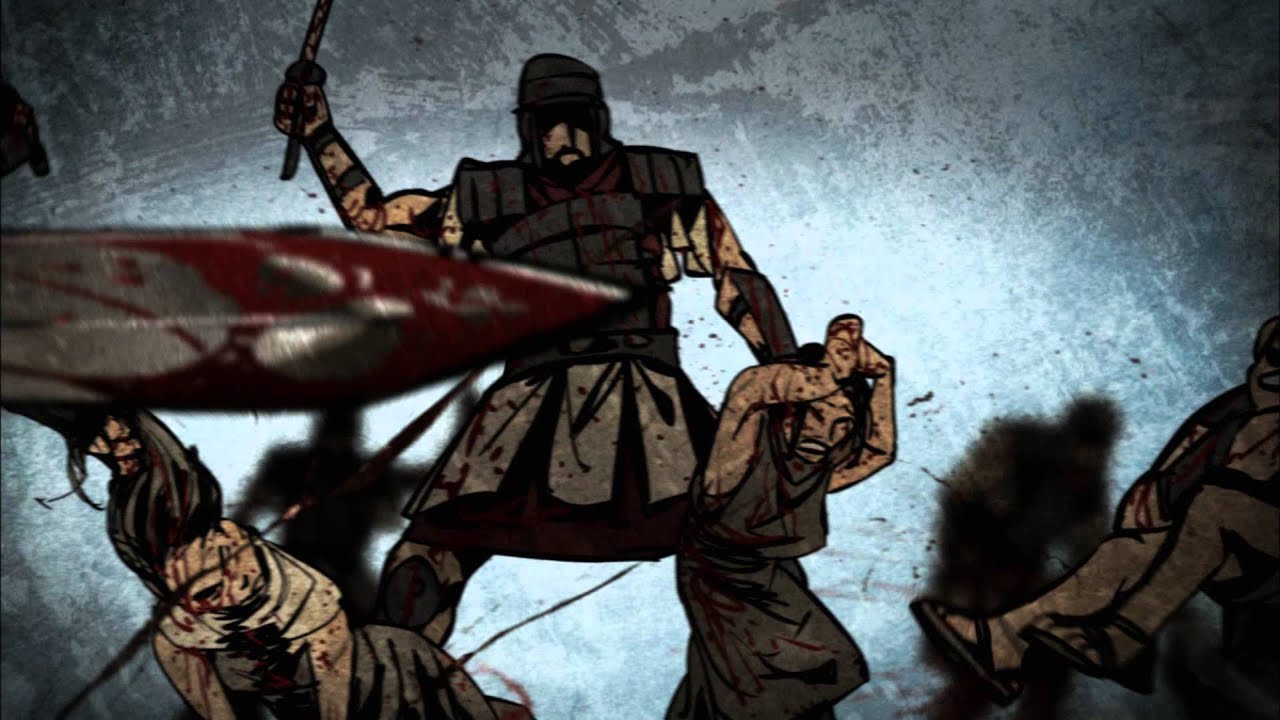
Produced by History Channel, Ancients Behaving Badly is supposed to be educational but is, in actuality, infotainment.  Done up as a scandal show, replete with dramatic (and sometimes over the top) narration, the show's style is lurid and sensational and, consequently, quite entertaining.  The production is generally excellent (though the computer animated recreations of the subjects' faces looks a bit goofy) and features really well-done graphic novel-style animations of each subject's darkest moments that are appropriately creepy, sinister and/or horrific (e.g., comic book blood sprays):


Also good is the ancillary information that the viewer learns about the life and times of each subject (most are from the Iron Age) as they rise in power.  As with similar History Channel offerings, Ancients Behaving Badly covers the contemporary political and military history, and the discussion of military weapons and technology is quite good, such as the ballista:


Each show ends with the historical figure being analyzed by an "Ancients Behaving Badly Psychograph." The y-axis rates them from "goal driven killer" to "psychopathic murderer", while the x-axis measures individual pathologies.  The subject is then compared to other miscreants, ancient and modern.

Sounds good, right?

Well, Ancients Behaving Badly turns groan worthy when it comes to historical accuracy.  Beyond run of the mill problems, such as misquoting names and dates, where the show really falls down is when it misleadingly suggests rumor and innuendo as fact: For example, in the episode on NeroAncients Behaving Badly repeats the myth that Nero fiddled while Rome burned.  The guy actually did plenty of terrible things, so there's no reason to perpetuate politically motivated falsehoods two millennium after the fact.

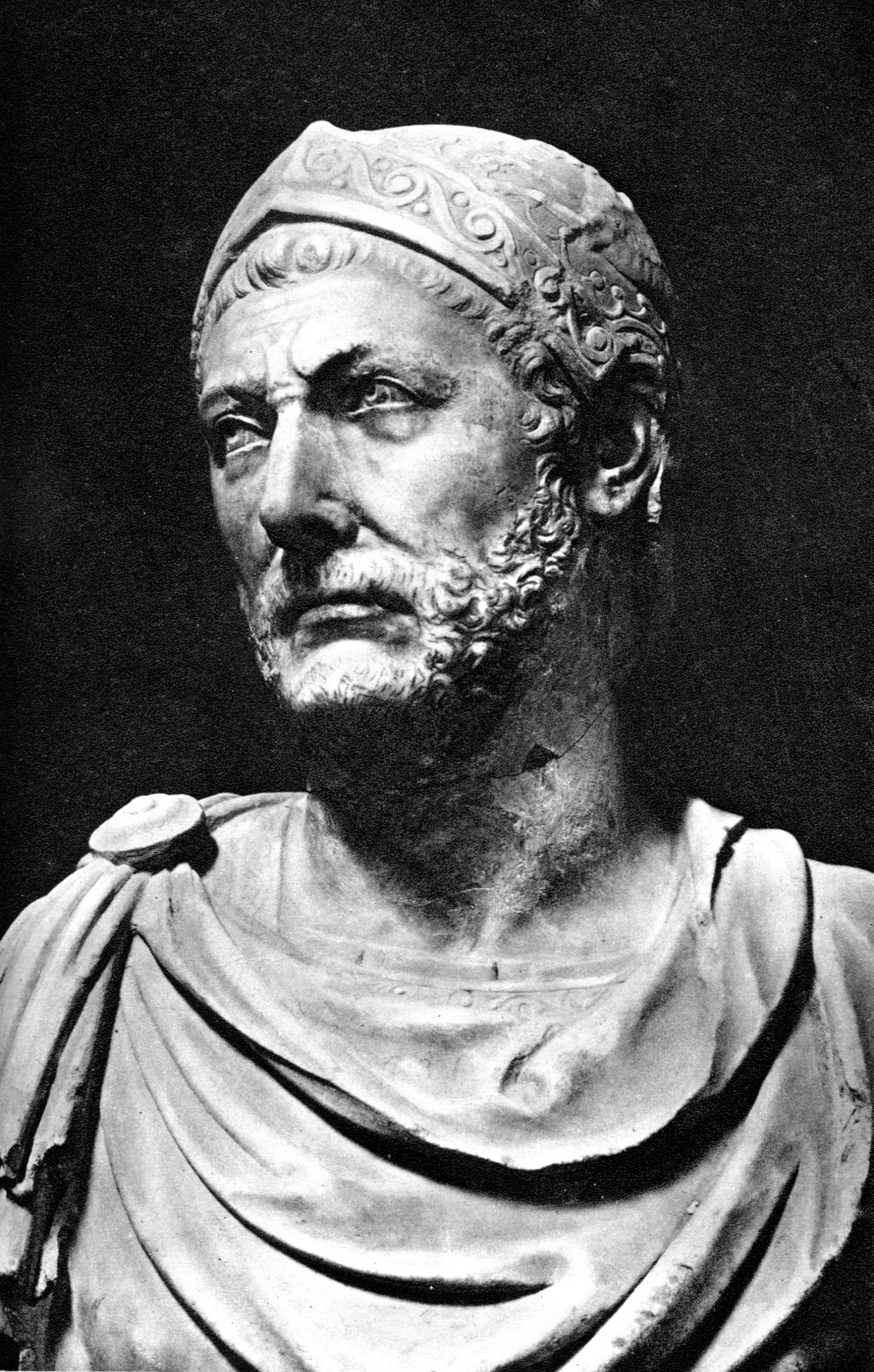
Moreover, sometimes Ancients Behaving Badly veers straight into character assassination: For example, in the episode on Hannibal Barca, the show begins by asking "Was Hannibal a great general or just a ruthless killer?"  Given that the Carthaginian was arguably the greatest military commander of all time, this is a ridiculously loaded question:


To rise to the top of power like these people did, the subjects had to be ruthless and do some terrible things, so there's real material to use for a show like this.  Consequently, there's no reason to stoop to the level of a political attack ad.


Overall, I did personally like Ancients Behaving Badly and I really want to give the program some love because K's dad is one of the regular contributors!  However, I'm leery of giving the show a high rating because it's hard for a casual viewer to distinguish between fact and opinion (or outright fiction).


SC's Parting Shot: 5 of 10